
Stap Wireless
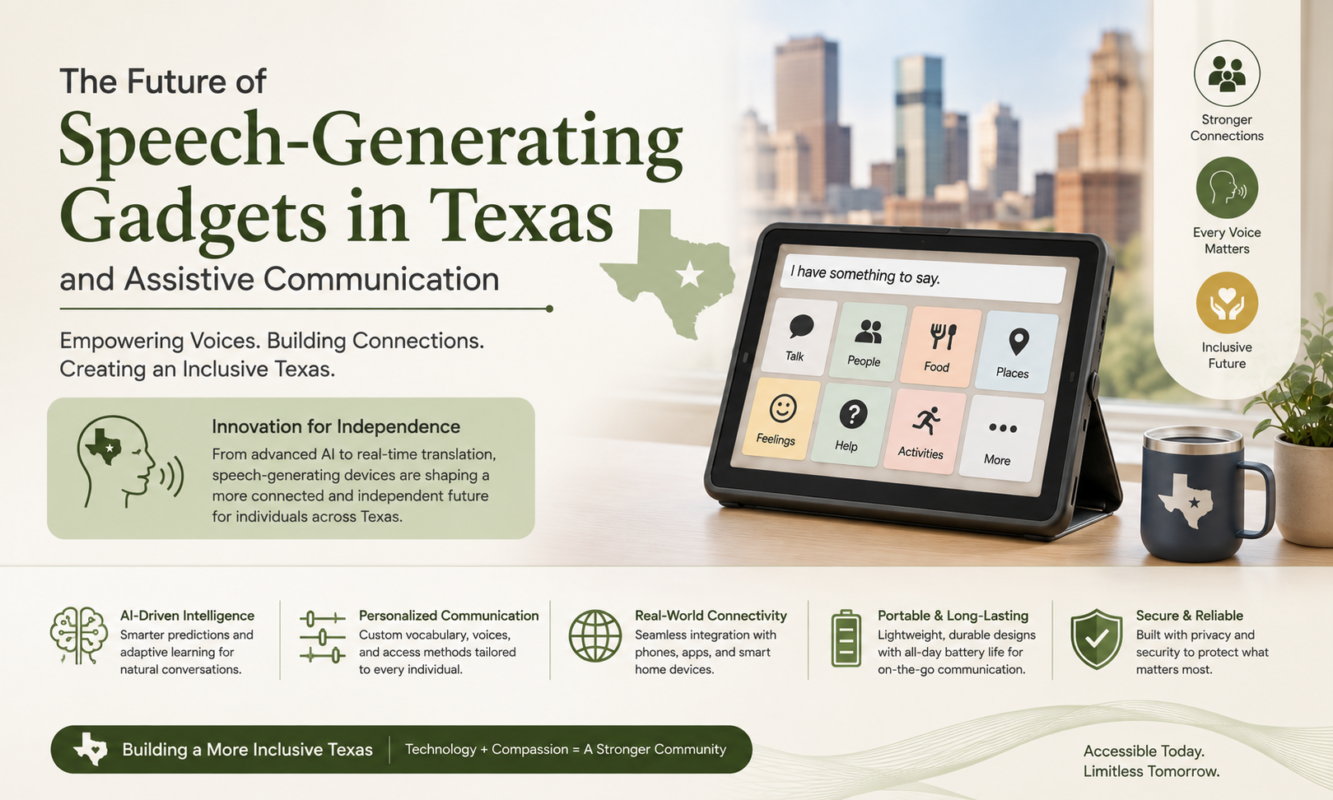
The Future of Speech-Generating Gadgets in Texas and Assistive Communication
Sep
Communication is essential for expressing needs, making choices, building relationships, learning, and participating in everyday life. For people who cannot rely on speech consistently, technology can provide another way to communicate with family, teachers, therapists, healthcare professionals, coworkers, and the wider community.
The future of speech-generating devices is moving beyond simple electronic communication tools. Modern solutions can combine customizable vocabulary, synthesized or recorded voices, touchscreens, alternative access methods, mobile applications, and other assistive technologies. For families and professionals inTexas, understanding these developments can make it easier to identify a communication solution that fits an individual’s abilities and daily routine.
Augmentative and alternative communication (AAC) can include everything from communication boards and gestures to high-tech devices that generate spoken output. The American Speech-Language-Hearing Association (ASHA) notes that AAC may supplement existing speech or provide an alternative when speech is absent or not functional.
What Are Speech-Generating Gadgets and Assistive Communication Devices?
How Do Speech-Generating Devices Support Communication?
Speech-generating devices allow a person to select letters, symbols, words, phrases, or stored messages that are converted into audible speech. Depending on the system, the user may interact through a touchscreen, physical buttons, switches, eye-gaze technology, or another access method.
These speech-generating gadgets can be particularly useful for people whose speech is limited, difficult to understand, or unavailable. They can support communication at home, school, work, medical appointments, and community activities.
What Is Augmentative and Alternative Communication?
Augmentative and alternative communication devices are part of a broader approach known as AAC. AAC does not necessarily mean a person has no speech. Some people use AAC to supplement speech when they are tired, in noisy environments, or communicating with unfamiliar people.
AAC can include unaided methods such as gestures and signs, low-tech tools such as communication boards, and high-tech systems such as tablets, apps, and dedicated speech-generating devices.
Who Can Benefit From Speech-Generating Technology?
The technology can support children and adults with a wide range of communication needs. Depending on individual circumstances, potential users may include people with autism, cerebral palsy, neurological conditions, speech-language disorders, developmental disabilities, stroke-related communication difficulties, or other conditions affecting speech.
The important consideration is not simply a diagnosis. The right system should match the person’s communication goals, motor abilities, vision, hearing, language skills, environment, and preferences.
Are Speech-Generating Devices Better Than Traditional Communication Methods?
Not necessarily. AAC works best when it gives a person multiple ways to communicate rather than forcing them to rely on a single method.
A person might use gestures at home, a communication board during therapy, and a speech-generating device at school or work. The most useful system is the one that supports effective communication in real situations.
How Is Speech-Generating Technology Evolving in Texas?
How Have Dedicated AAC Devices Changed?
Earlier communication devices were often specialized systems with limited vocabulary and relatively basic voice output. Today’s technology can offer customizable vocabulary, multiple access methods, language options, and more flexible interfaces.
This shift is especially important because communication needs can change over time. A device that works for a young child may need substantial changes as the child develops new language, literacy, educational, and social skills.
What Role Do Tablets and Apps Play?
Tablets and smartphones have made high-tech AAC more portable and familiar. Some applications can provide symbol-based communication, text-to-speech, customizable vocabulary, and other features.
However, a consumer should not choose an AAC solution simply because it runs on a popular tablet. Durability, accessibility, mounting, battery life, software support, and the user’s ability to operate the device should all be considered.
How Could Artificial Intelligence Improve AAC?
AI could eventually make communication systems more responsive to individual users. Potential applications include predictive language, personalized vocabulary suggestions, improved voice generation, and context-aware communication.
These developments are promising, but AI should complement, not replace, professional assessment and user preferences. The goal is better communication, not simply more advanced technology.
Will Personalized Voices Become More Common?
Voice personalization is already an important area of AAC development. Some systems use synthesized speech, while others can use recorded or personalized voice technology. ASHA describes both synthesized and digitized speech output and notes that voice banking can help create a synthetic voice that approximates a person’s natural voice.
For some users, having a voice that feels personal can be an important part of identity and self-expression.
What Is the Future of Speech-Generating Devices in Texas?
Why Is Accessible Communication Technology Important in Texas?
For families searching for speech-generating devices in Texas, the most important consideration is how technology works in everyday life.
A communication system may need to function in a classroom, therapy session, restaurant, doctor’s office, workplace, family gathering, or public setting. Texas users can benefit from solutions designed around real-world communication rather than technology specifications alone.
How Can Schools Use AAC Technology?
Schools can incorporate AAC into classroom participation, social interaction, learning activities, and communication with teachers and classmates.
An effective system should allow students to communicate beyond simply requesting an item. Vocabulary may need to support answering questions, making comments, asking for help, participating in lessons, expressing opinions, and interacting socially.
How Can Healthcare Providers Support AAC Users?
Healthcare visits can be challenging when a person cannot communicate symptoms, questions, preferences, or concerns independently. Assistive communication technology can help users participate more actively in conversations.
Healthcare professionals and caregivers should also be prepared to communicate with AAC users rather than directing every question to a companion.
How Can AAC Support Communication at Home?
At home, the device should be available for ordinary conversations, not only therapy sessions. Families can use it for choices, storytelling, questions, jokes, social conversations, requests, and personal expression.
Consistent everyday use can help make the system a practical communication tool instead of something used only during structured activities.
What Features Should You Look for in a Speech-Generating Device?
Is Voice Quality Important?
Yes. The voice should be clear and comfortable for the user and communication partners. Depending on the device, users may have different voices, languages, or speech-output options.
Should Vocabulary Be Customizable?
Absolutely. Vocabulary should reflect the user’s age, interests, routines, culture, relationships, school or workplace environment, and communication goals.
A child may need school-related vocabulary, while an adult may need words associated with employment, healthcare, hobbies, and independent living.
What Access Methods Are Available?
Different users require different ways to operate a device. Options may include:
- Touchscreen selection
- Physical buttons
- Switch access
- Eye-gaze systems
- Keyboards
- Joysticks or alternative pointing devices
- Scanning systems
The right choice depends on the individual’s motor and sensory abilities. ASHA emphasizes matching AAC systems to individual strengths, needs, communication environments, and access requirements.
Should Portability and Durability Matter?
Yes. A device that works well at home but is too fragile or cumbersome for school, work, travel, or community activities may not be the best long-term choice.
Consider the case, mounting system, battery life, weight, screen size, and protection against everyday wear.
How Could AI Transform Assistive Communication?
Could Predictive Text Make Communication Faster?
Potentially. Predictive systems could learn commonly used words and phrases and make relevant suggestions. This may reduce the number of selections required to create a message.
Could AI Create More Natural Voices?
AI-based voice technology may provide increasingly personalized and natural-sounding output. For people who have lost the ability to speak, preserving or recreating aspects of a familiar voice could become an increasingly important feature.
Could Devices Understand Context?
Future systems may be able to use conversational context to suggest relevant vocabulary or phrases. However, privacy, accuracy, user control, and data security will remain important considerations.
Will AI Replace Speech-Language Professionals?
No. Technology does not eliminate the need for assessment, training, customization, and ongoing support. AAC implementation involves communication goals, language development, access methods, environmental factors, and communication partners.
ASHA recommends collaborative decision-making and ongoing support when AAC systems are introduced and used.
Who Can Benefit From Speech-Generating Devices?
Are They Useful for Children?
Children with complex communication needs may use AAC to participate in learning, play, social interaction, and family life. AAC can be considered early rather than waiting for a child to reach a particular age or skill level.
Can Adults Use AAC?
Yes. Adults may use AAC because of developmental disabilities, neurological conditions, stroke, progressive diseases, or other communication challenges.
Are These Communication Devices for Disabilities Only?
Not necessarily. AAC can also be used temporarily, such as when a person cannot communicate normally because of a medical situation. ASHA describes AAC as potentially temporary or long-term depending on the individual’s circumstances.
How Do You Choose the Right AAC Device in Texas? (h2)
What Should You Assess First?
Start with the person’s communication goals rather than the device itself.
Ask:
- What does the person need to communicate?
- Where will communication happen?
- How does the person currently communicate?
- What physical movements can they control?
- Can they reliably see and select symbols?
- Do they need multiple languages?
- Who will support and maintain the system?
Should You Choose a Dedicated Device or Tablet?
There is no universal answer.
A dedicated system may be preferable when durability, specialized access, dedicated communication functionality, or complex mounting is important. A tablet-based solution may appeal to users who want portability and access to multiple applications.
The best option depends on the individual rather than the popularity of the hardware.
Should You Test a Device Before Buying?
Whenever possible, yes. A demonstration or trial can reveal problems that are difficult to identify from specifications alone.
A device may look excellent on paper but be uncomfortable to hold, difficult to navigate, too slow, visually overwhelming, or challenging to access physically.
Are Dedicated AAC Devices Better Than Tablet-Based Apps?
Factor | Dedicated AAC Device | Tablet + AAC App |
Portability | Varies by model | Usually convenient |
Customization | Often extensive | Depends on app |
Durability | Often purpose-built | Depends on tablet and case |
Cost | Can be higher | May provide lower-cost options |
Accessibility | Specialized options available | Depends on hardware and software |
Everyday use | Primarily communication-focused | Can support multiple activities |
When Is a Dedicated Device a Better Choice?
It may make sense when the user requires specialized access, greater durability, dedicated communication functions, or a configuration designed around complex physical needs.
When Does a Tablet-Based Solution Make Sense?
A tablet may be suitable when portability, familiarity, flexibility, and access to other applications are priorities.
The decision should be based on functional needs rather than price alone.
How Much Do Speech-Generating Devices Cost in Texas?
What Determines the Price?
Costs can vary considerably depending on the hardware, software, access technology, durability, mounting requirements, accessories, and level of customization.
Advanced systems may require additional equipment such as keyguards, mounts, switches, alternative pointing devices, or specialized access technology.
Are AAC Apps Less Expensive?
Some tablet-based AAC solutions can have a lower initial hardware cost, but the total cost may include the tablet, protective case, software, accessories, maintenance, and future upgrades.
Therefore, compare the total cost of ownership, not simply the purchase price.
Is the Cheapest Option the Best?
Not always. A less expensive system that the user cannot operate effectively may ultimately provide less value than a better-matched solution.
The goal should be reliable, independent, and meaningful communication.
Where Can Texas Residents Get Help Choosing AAC Technology?
Can a Speech-Language Pathologist Help?
Yes. Speech-language pathologists can assess communication needs, recommend AAC approaches, help customize vocabulary, and support training.
Can Occupational or Physical Therapists Help?
They may help address positioning, motor access, mounting, switch selection, and other physical considerations when appropriate.
Why Is Training Important?
Buying a device is only the beginning. Users, parents, teachers, caregivers, and communication partners may all need guidance on how to use the system consistently.
A strong support plan can make the difference between a device that sits unused and a system that becomes part of everyday communication.
What Challenges Should You Expect With Speech-Generating Devices?
Is There a Learning Curve?
Yes. Users may need time to learn where vocabulary is located, how to create messages, and how to navigate the system.
Can a Device Become Outdated?
It can if vocabulary, software, hardware, or access needs are not updated. Communication needs change, so the system should be reviewed periodically.
What Happens if the Device Breaks?
A backup communication method is important. Low-tech communication boards or other alternatives can provide a temporary solution when a high-tech system is unavailable.
ASHA recommends that AAC users have access to their communication tools and recognizes that multiple communication modalities can be valuable.
What Will Speech-Generating Technology Look Like in the Future?
Will Devices Become More Personalized?
Likely. Future systems may offer more individualized vocabulary, voices, layouts, and access methods.
Will Eye-Gaze Technology Improve?
Continued development in alternative access may make hands-free communication more practical for people with significant motor limitations.
Could Wearables Become Part of AAC?
As wearable technology develops, communication functions may become more portable and integrated with other personal devices.
Will AAC Become More Affordable?
Technology trends may eventually reduce costs for some types of hardware and software, although specialized systems and access equipment can remain more expensive.
The important measure of progress is not simply smaller or faster devices. It is whether technology gives people greater independence and more opportunities to participate.
How Can Texas Benefit From Next-Generation AAC Technology?
Can AAC Improve Independence?
Yes. A well-matched communication system can give users more control over everyday decisions, requests, social interactions, and personal expression.
Can It Support Inclusive Education?
Students can use AAC to participate in classroom discussions, answer questions, interact with peers, and demonstrate what they know.
Can It Improve Healthcare Communication?
Communication tools can help individuals express symptoms, preferences, questions, and concerns during healthcare interactions.
Can It Support Employment?
For adults, reliable communication can support workplace conversations, meetings, customer interactions, and independent participation.
What Questions Should You Ask Before Buying an AAC Device?
Is the System Appropriate for the User?
Consider communication goals, physical access, language, literacy, vision, hearing, and daily environments.
Can the Vocabulary Grow With the User?
Look for systems that can be customized as communication needs change.
Is Training Included?
Ask who will provide training and whether family members, teachers, caregivers, and other communication partners can receive support.
Can the User Try It First?
A trial can help determine whether the device is comfortable, understandable, accessible, and useful in real-life situations.
What Happens After Purchase?
Ask about technical support, repairs, software updates, accessories, warranties, and replacement options.
Conclusion
Choosing the right speech-generating solution is ultimately about improving communication, independence, and quality of life not simply selecting the most advanced device. The best speech-generating devices Texas families consider should match the individual’s communication abilities, lifestyle, access needs, and personal goals.
With the right assessment, professional guidance, device trial, training, and ongoing support, assistive communication devices Texas users rely on can become valuable tools for everyday conversations, education, work, and social interaction. As AAC technology Texas continues to evolve, advances in personalization, artificial intelligence, voice options, and accessibility are expected to create even more flexible communication opportunities.
For individuals and families in Texas, the future of assistive communication is promising. The most effective technology will be technology that adapts to the person, supports their unique voice, and helps them communicate confidently in the moments that matter most.
Frequently Asked Questions About Speech-Generating Devices in Texas
What Is the Best Speech-Generating Device for Someone Who Cannot Speak?
There is no single best device for everyone. The appropriate system depends on communication goals, motor abilities, access requirements, vocabulary, environment, and personal preferences.
Are Speech-Generating Devices Covered by Insurance in Texas?
Coverage depends on the individual’s insurance or funding program and the applicable eligibility and documentation requirements. Confirm current coverage before purchasing equipment.
How Do I Get an AAC Evaluation in Texas?
A speech-language pathologist with AAC experience can help assess communication needs and determine which types of systems may be appropriate.
Can an AAC Device Be Used at School and Home?
Yes. Ideally, the system should support communication across multiple environments rather than being limited to one location.
Are Tablets Suitable for Speech-Generating Communication?
They can be, depending on the user’s needs and the AAC application, accessibility features, durability, and support available
