
Stap Wireless, Uncategorized
The Latest Technology Behind Speech-Generating Gadgets
Aug
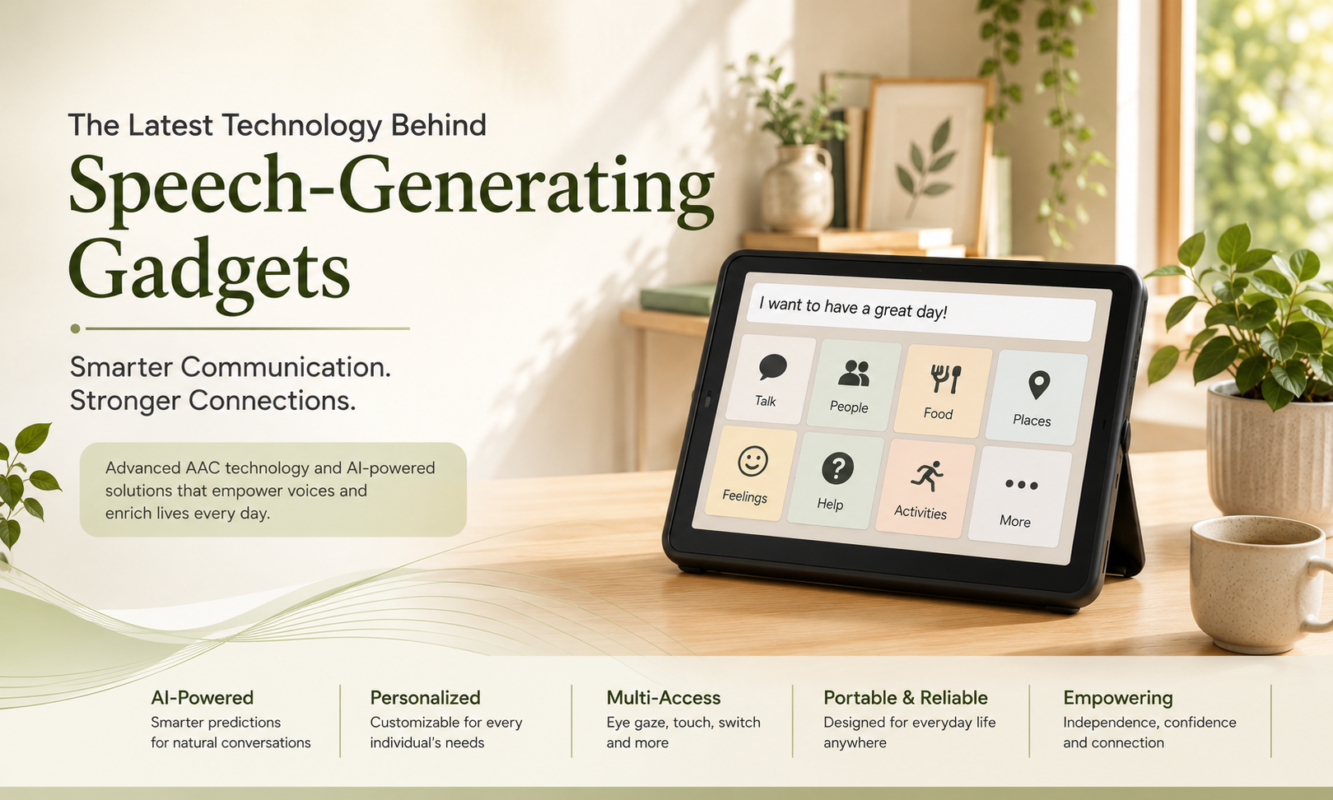
Communication technology has advanced rapidly over the last decade, making it easier than ever for individuals with speech disabilities to express themselves. The Latest Technology Behind Speech-Generating Gadgets combines artificial intelligence, advanced AAC technology, eye-tracking systems, speech synthesis, and wearable innovations to provide faster, more natural communication. Whether someone is living with ALS, cerebral palsy, autism, aphasia, or another condition affecting speech, today’s speech-generating devices are more intelligent, portable, and personalized than previous generations.
This guide answers the most common questions about modern communication technology, helping families, caregivers, educators, and healthcare professionals understand the latest innovations available.
What is a Speech-Generating Device?
A speech-generating device (SGD) is an electronic communication tool that converts text, symbols, eye movements, or other user inputs into spoken words. These assistive communication devices allow individuals who cannot rely on natural speech to communicate independently.
Modern devices are available as dedicated communication systems or applications running on tablets and computers. Many also include AI-powered prediction, customizable vocabulary, and cloud-based personalization.
Defining AAC and SGD Technology
AAC technology (Augmentative and Alternative Communication) includes every method used to support or replace speech.
Examples include:
- Digital communication boards
- Tablet-based communication apps
- Eye-gaze controlled devices
- Touchscreen speech systems
- Symbol-based communication software
- AI-assisted speech prediction
Today’s speech synthesis technology creates voices that sound significantly more natural than earlier robotic voices.
The History and Evolution of Synthetic Speech
Earlier communication devices relied on simple recorded phrases. Today’s systems use neural speech synthesis, allowing users to create natural conversations instead of selecting only pre-recorded messages.
Recent developments include:
- AI-generated natural voices
- Personalized voice creation
- Faster prediction engines
- Cloud synchronization
- Multilingual communication support
Cutting-Edge Innovations in Communication
Technology continues to transform how people communicate.
AI-Assisted Wearable Neck Patches (UCLA Research)
Researchers have developed flexible wearable patches capable of detecting tiny throat muscle movements. Artificial intelligence interprets these signals and converts them into spoken language.
Potential benefits include:
- Speaking without functional vocal cords
- Real-time speech generation
- Comfortable wearable design
- High communication accuracy
This innovation represents one of the most exciting developments in AI communication devices.
Context-Aware and Immersive Communication Systems
Next-generation AAC technology is becoming context aware.
Instead of predicting random words, future devices analyze surroundings using:
- GPS
- Camera input
- Environmental sensors
- User routines
This allows the device to suggest relevant vocabulary automatically, reducing the number of selections required.
For example:
At a restaurant, the device may automatically recommend food-related phrases.
At a doctor’s office, it may prioritize healthcare vocabulary.
Smart Voice-to-Text AI for Motor Limitations (Wispr Flow)
Voice AI platforms continue improving accessibility.
Modern AI systems can:
- Remove filler words
- Correct grammar automatically
- Improve sentence clarity
- Adjust writing style
- Learn user preferences
These technologies particularly benefit individuals with limited motor control who experience fatigue while typing.
Specialized Solutions for Different Conditions
Different communication challenges require different technologies.
ALS: Eye-Gaze Technology and Voice Banking
People living with ALS often experience progressive speech loss.
Modern eye-gaze technology allows users to control communication devices simply by looking at letters, icons, or words.
Many individuals also choose voice banking, which records their natural voice before speech becomes difficult.
Benefits include:
- Personal voice preservation
- Faster communication
- Independent interaction
- Improved emotional connection
Cerebral Palsy: Mobility Aids and Adaptive Pointers
Individuals with cerebral palsy may have difficulty controlling traditional touchscreens.
Today’s assistive communication devices support:
- Head pointers
- Switch scanning
- Joystick navigation
- Adaptive keyboards
- Touch sensitivity adjustments
These options create flexible communication solutions tailored to individual abilities.
Aphasia and Stroke: Tablet-Based Communication Tools
Stroke survivors with aphasia often retain language knowledge but struggle to express words.
Tablet-based speech-generating devices provide:
- Picture communication
- Phrase libraries
- Predictive text
- Large visual buttons
- Therapy integration
Many systems also track progress over time.
Navigating the Device Selection Process
Choosing the right communication device depends on several factors.
Important considerations include:
- Diagnosis
- Motor abilities
- Vision
- Cognitive skills
- Age
- Daily environment
- Portability
- Battery life
- Technical support
A professional AAC evaluation helps identify the most appropriate solution.
How to Start a Free Device Trial
Many manufacturers and AAC providers offer free or low-cost trial programs.
During the trial, evaluate:
- Ease of use
- Screen size
- Voice quality
- Input method
- Vocabulary customization
- Family training
- Technical support
Trying multiple options often leads to better long-term outcomes.
Evaluating Display and Input Options
Today’s communication devices support several input methods:
- Touchscreen
- Eye tracking
- Head tracking
- Mouse control
- Switch access
- Keyboard input
- Voice control (when appropriate)
Selecting the correct access method significantly improves communication speed.
Funding, Insurance, and Legal Rights
Communication devices are medically necessary for many individuals.
Fortunately, several funding options are available.
Medicare and Private Insurance Coverage Rules
Depending on eligibility, speech-generating devices may be covered through:
- Medicare
- Medicaid
- Private insurance
- State assistive technology programs
- Educational funding
Documentation from speech-language pathologists is typically required.
Resources for Veterans and Low-Income Families
Additional funding may be available through:
- Veterans assistance programs
- Disability organizations
- Non-profit foundations
- State technology lending programs
- Community grants
Working with an AAC specialist can simplify the funding process.
Why Are Modern Speech-Generating Gadgets Better Than Older Devices?
Today’s technology offers numerous advantages.
Modern devices feature:
- Artificial intelligence
- Faster processors
- Natural speech synthesis
- Cloud backups
- Personalized voices
- Better accessibility
- Improved battery life
- Wireless connectivity
- Multiple language support
- Continuous software updates
These improvements make communication faster, more natural, and more independent.
Conclusion
The Latest Technology Behind Speech-Generating Gadgets is transforming communication for people with speech and language challenges. From AI-powered AAC technology and speech synthesis technology to eye-gaze technology, voice banking, and intelligent prediction systems, today’s solutions offer greater independence than ever before.
Whether you’re exploring options for yourself, a loved one, or a client, understanding these innovations can help you choose a communication system that supports long-term success. As technology continues to evolve, assistive communication devices will become even more personalized, accurate, and accessible.
Frequently Asked Questions
What is a speech-generating device (SGD)?
An SGD is a high-tech communication device that helps individuals who cannot rely on natural speech communicate by producing spoken language through digitized recordings or speech synthesis.
Can someone speak without vocal cords?
Yes. Emerging wearable AI technologies can translate throat muscle movements into understandable speech, helping people communicate even without functional vocal cords.
How does context-aware AAC improve communication?
Context-aware AAC uses information like location, surroundings, and user behavior to predict relevant words and phrases, making communication faster and easier.
What makes Wispr Flow different from standard dictation?
Wispr Flow removes filler words, corrects mistakes, improves sentence quality, and adapts writing style automatically, making it useful for people with motor limitations.
How does eye-gaze technology work for ALS patients?
Eye-gaze technology tracks where a person looks on a screen. The user selects letters, words, or phrases with their eyes, and the device converts those selections into spoken communication.

Pingback: Future Trends in Assistive Devices: AI & Voice Technology
Pingback: Accessibility Devices Available Through Texas STAP Program